Make AI API Operations Idempotent
Make AI API Operations Idempotent: a production guide with an explicit decision, reusable artifact, failure tests, operating signals, and source-qualified limits.
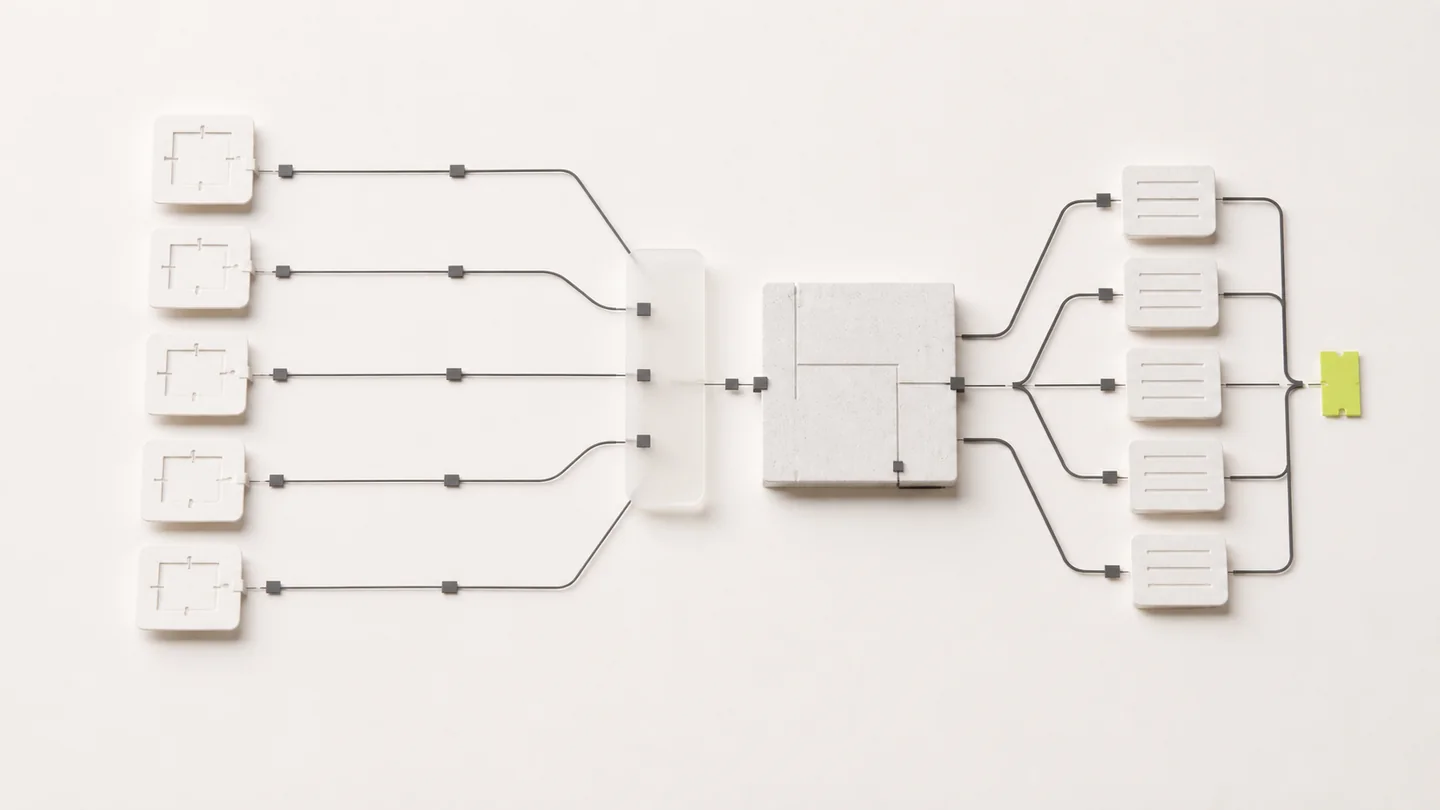
Make AI API Operations Idempotent: a production guide with an explicit decision, reusable artifact, failure tests, operating signals, and source-qualified limits.
The operating rule
Make AI API Operations Idempotent should be implemented as a reliability control contract, not as a one-off configuration. Freeze the protocol, ownership, evidence, and rollback condition before traffic moves. The concrete control points in this guide are logical_request_id, idempotency_key, request_digest, durable_result.
Make side-effecting AI operations idempotent at the application boundary. Bind a caller-supplied idempotency key to one authenticated principal, operation, and canonical request digest; reserve the operation atomically; persist terminal success or failure; and return the same durable result on replay. Model call IDs are correlation data, not a substitute for this ledger.
Draw the failure boundary first
Separate the reader-facing task from the control-plane work behind it. Client setup owns the local file or environment variable; the gateway owns authentication, routing, limits, accounting, and attempt records; the provider owns its native protocol and volatile capability contract. A passing text prompt proves only that one path worked once.
Reliability controls must be defined on attempts and terminal states, not on a vague notion of a request “working.” Preserve the caller deadline, distinguish overload from permanent errors, and make rejection, cancellation, retry, fallback, and settlement observable as separate outcomes.
The owner record for this page is ai-api-idempotency; its frozen controls are logical_request_id, idempotency_key, request_digest, durable_result. Every value is reviewed at the wire or durable-state boundary and never inferred from a marketing label.
State and control contract: Make AI API Operations Idempotent
Use the following review record as the deployable artifact. Technical values are intentionally explicit so a reviewer can compare configuration, wire evidence, and durable state without relying on a screenshot or a successful-looking outer response.
| Control point | Fixed decision | Evidence to retain |
|---|---|---|
key_scope |
principal_plus_operation_plus_idempotency_key |
principal_id + operation + key |
request_binding |
canonical_digest_must_match |
request_digest + schema_version |
reservation |
atomic_pending_record_before_side_effect |
unique_constraint + created_at + owner |
replay |
same_key_same_digest_returns_durable_result |
original_result_id + replay_count |
conflict |
same_key_different_digest_rejected |
conflict_status + both_digests_without_payload |
recovery |
stale_pending_requires_owned_reconciliation |
lease + side_effect_receipt + terminal_write |
Exercise the critical transition
The example uses placeholders and deterministic inputs. Replace identifiers with reviewed values, never with credentials or customer content. Preserve the exact configuration snapshot alongside the probe result.
BEGIN;
INSERT INTO operation_ledger
  (principal_id, operation, idempotency_key, request_digest, status)
VALUES
  (:principal, :operation, :key, :digest, 'pending')
ON CONFLICT DO NOTHING;
-- only the transaction that owns the new row may perform the side effect
-- persist terminal result before returning it to the caller
COMMIT;
Verify behavior under failure
Run the ladder in order. A later check cannot compensate for a missing earlier boundary, and every attempt must remain attributable to one logical request.
- Freeze the current client, gateway policy, model alias, route set, and observable baseline. Evidence record for
key_scope: enforceprincipal_plus_operation_plus_idempotency_keyand retainprincipal_id + operation + key. - Run one deterministic positive probe and capture the client-visible response, request ID, selected route, terminal state, and usage. Evidence record for
request_binding: enforcecanonical_digest_must_matchand retainrequest_digest + schema_version. - Run the paired negative, limit, or disconnect case and verify that it fails in the intended layer. Evidence record for
reservation: enforceatomic_pending_record_before_side_effectand retainunique_constraint + created_at + owner. - Repeat the probe through the actual protocol surface; do not infer native support from a neighboring compatibility endpoint. Evidence record for
replay: enforcesame_key_same_digest_returns_durable_resultand retainoriginal_result_id + replay_count. - Roll out to a bounded cohort with an explicit owner, expiry time, stop threshold, and prepared rollback. Evidence record for
conflict: enforcesame_key_different_digest_rejectedand retainconflict_status + both_digests_without_payload. - Re-read durable configuration and accounting after the test, then remove temporary access or test data. Evidence record for
recovery: enforcestale_pending_requires_owned_reconciliationand retainlease + side_effect_receipt + terminal_write.
Failure amplification to prevent
Treat each item below as a release blocker. A 200 response, attractive dashboard, or single successful demo does not override these failure conditions.
memory_only_deduplication— Process memory cannot protect retries after restart, failover, or concurrent execution on another node.key_without_digest— Reusing a key for a different payload can return the wrong result or hide a caller bug.check_then_act_race— Reading for an existing record and writing later allows two workers to perform the same side effect.model_call_id_as_key— A model-generated call ID may change across retries and does not define the authenticated business operation.
Trip signals, denominators, and stop conditions
Monitor success and harm together. The threshold is a policy input, not a universal benchmark; choose it from the workload SLO and record the denominator before the observation window begins.
| Signal | Decision threshold | Action |
|---|---|---|
duplicate_side_effect_count |
0 |
stop_operation_and_reconcile |
idempotency_digest_conflicts |
review_each_event |
reject_and_alert_owner |
stale_pending_age |
<_owned_recovery_deadline |
reconcile_with_external_receipt |
replay_result_mismatch |
0 |
disable_endpoint |
Modelflare boundary and limitations
Modelflare can centralize OpenAI-compatible and native-protocol routing, scoped keys, groups, usage records, and failure handling. A configured channel is not proof that every optional field, model alias, retention promise, region, or fallback is supported. Verify the selected route with its native protocol, preserve explicit zero values, and use the final durable settlement as billing truth.
Idempotency does not mean every model generation becomes identical. It means the protected business operation has one durable outcome for the same authenticated request. Read-only generation may be retried under a budget, while payments, messages, database mutations, and tool actions need operation-specific keys and reconciliation.
Continue through the topic cluster
Use the linked parent for the broader decision, the sibling for the next implementation step, and the documentation route for current client configuration. These body links are deliberate because managed CMS articles do not currently carry a separate related-slug field.
Frequently asked questions
Is an HTTP POST automatically non-idempotent?
HTTP method semantics and application idempotency are related but different; the ledger defines replay behavior for the business operation.
Can the gateway invent the key?
The layer that understands the business operation should define it. A gateway request ID alone may not identify the user-visible side effect.
How are stale pending rows handled?
Use an owned recovery lease and external receipt lookup; never blindly repeat the side effect.
Sources and verification date
Sources were checked on 2026-08-07. They establish external contracts and engineering principles; they do not prove an untested route or future provider state.